
In the world of SEO, links from major news outlets like The New York Times, The Sun, or Business Insider are incredibly powerful signals of trust.
However, you cannot buy these links, and you certainly cannot fake them. For online casinos, securing this coverage is even harder due to the stigma attached to the industry.
This is where gambling digital pr becomes your most valuable weapon. Unlike traditional PR which manages your reputation, Digital PR is laser-focused on SEO.
It involves creating viral stories and data studies that journalists want to write about, earning you high-authority backlinks that drive massive organic growth.
- What Is Gambling Digital PR? (It Is Not Just Press Releases)
- Why News Sites Hate Linking to Casinos (And How to Fix It)
- 3 Proven Campaign Strategies for 2026
- How to Pitch Journalists (Without Getting Blocked)
- The "Link Reclamation" Trick
- Measuring Success: It Is Not Just About Link Counts
- Frequently Asked Questions
- Conclusion
What Is Gambling Digital PR? (It Is Not Just Press Releases)
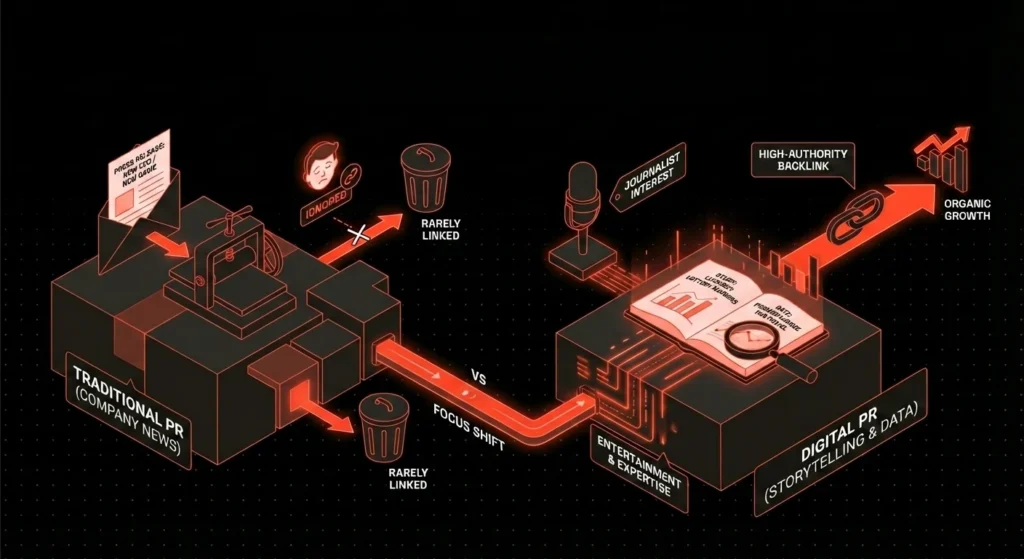
Many people confuse Digital PR with traditional public relations. Traditional PR usually involves sending out a press release saying “Casino Brand X hires a new CEO” or “We just launched a new slot game.”
To be honest, most journalists do not care about these stories, and they will rarely link to them.
Digital PR is different because it focuses on storytelling.
Instead of talking about your company, you talk about topics that interest the general public. You might release a study on “The luckiest numbers in lottery history” or “Which Premier League fans travel the furthest.”
You use your brand’s expertise in data and odds to create entertainment. The journalist writes an article about your interesting data, and they credit you with a backlink as the source.
Why News Sites Hate Linking to Casinos (And How to Fix It)
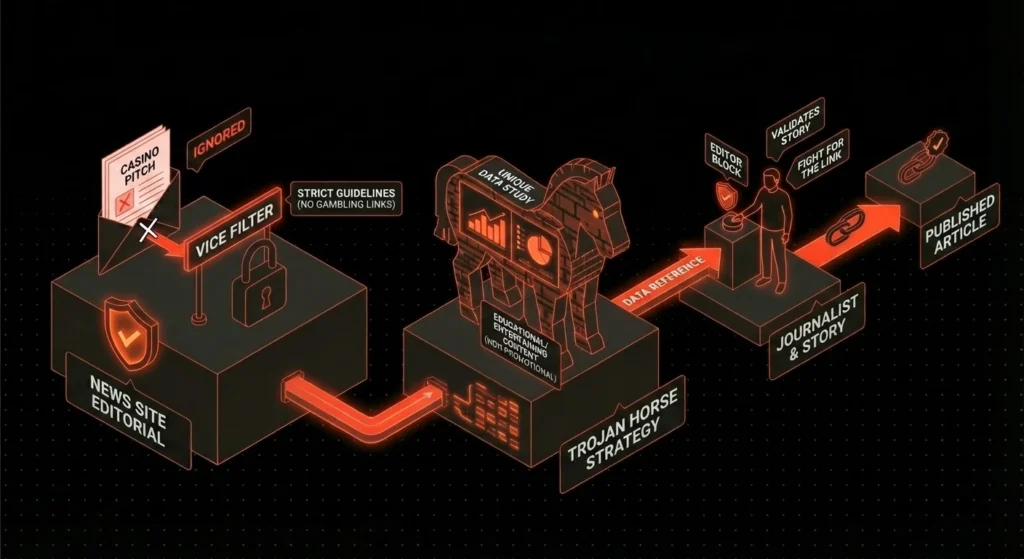
If you have ever tried to pitch a story to a major news site, you probably got ignored.
This is because most mainstream media outlets have strict editorial guidelines that prevent them from linking to “vice” industries like gambling or adult content.
The only way to bypass this block is to make your content non-promotional.
You cannot pitch a story that encourages people to bet. Instead, you must use the “Trojan Horse” strategy.
You provide a story that is purely educational or entertaining – like a map of the most expensive cities to visit – and the link serves only as a data reference.
If the data is unique enough, the journalist will fight their editor to keep the link because it validates their story.
3 Proven Campaign Strategies for 2026
To get coverage from top-tier public relations agencies and news desks, you need a hook. Here are the three most effective campaign types for the gambling niche.
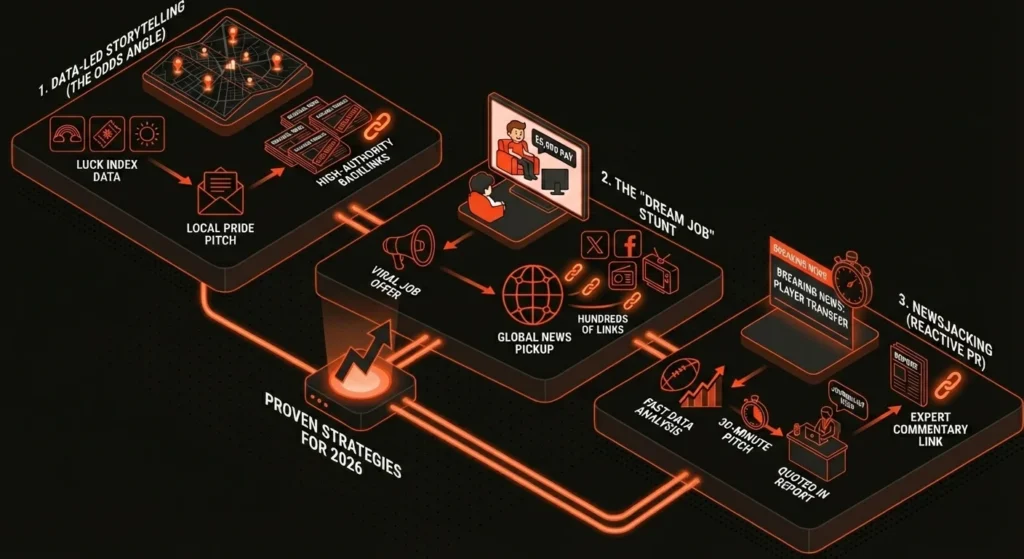
1. Data-Led Storytelling (The Odds Angle)
Journalists love ranking lists, especially when they tell people their hometown is special. You can use data to quantify an abstract concept like “luck.”
- The Idea: Create a “Luck Index” that ranks the luckiest cities in the country. Analyze 10 years of data on lottery wins, average sunshine hours, and even the number of rainbow sightings.
- The Hook: Local pride. Regional newspapers (like The Manchester Evening News or Chicago Tribune) are desperate for stories about their specific city. If they rank #1, they will publish it immediately.
- The Result: You get dozens of links from high-authority regional news sites, all citing your brand as the “data analysts” behind the study.
2. The “Dream Job” Stunt
This is a classic viral tactic. You create a job listing for a “role” that sounds too good to be true.
- The Idea: “We are hiring a Professional Simpson’s Watcher to help us predict the future. Pay: $5,000.”
- The Hook: It sounds crazy, but it is technically a real job offer.
- The Result: News outlets globally pick this up as a “weird news” story. It gets shared on social media, radio, and morning TV, earning you hundreds of high-authority links from major news domains.
3. Newsjacking (Reactive PR)
Newsjacking involves jumping on a breaking news story with expert commentary or data. Speed is critical here; you usually have only 1 or 2 hours to pitch before the news cycle moves on.
- The Idea: A major football player gets transferred to a new team.
- The Action: Within 30 minutes, you send a press note to sports journalists with updated data on how this transfer has shifted the team’s percentage chance of winning the league.
- The Result: Journalists need this data to add depth to their breaking news report, so they quote you and link to your odds page.
Resource: To find journalists who are actively looking for experts and data, you can use platforms like Connectively (formerly HARO) or check the hashtag #journorequest on X (Twitter).
How to Pitch Journalists (Without Getting Blocked)
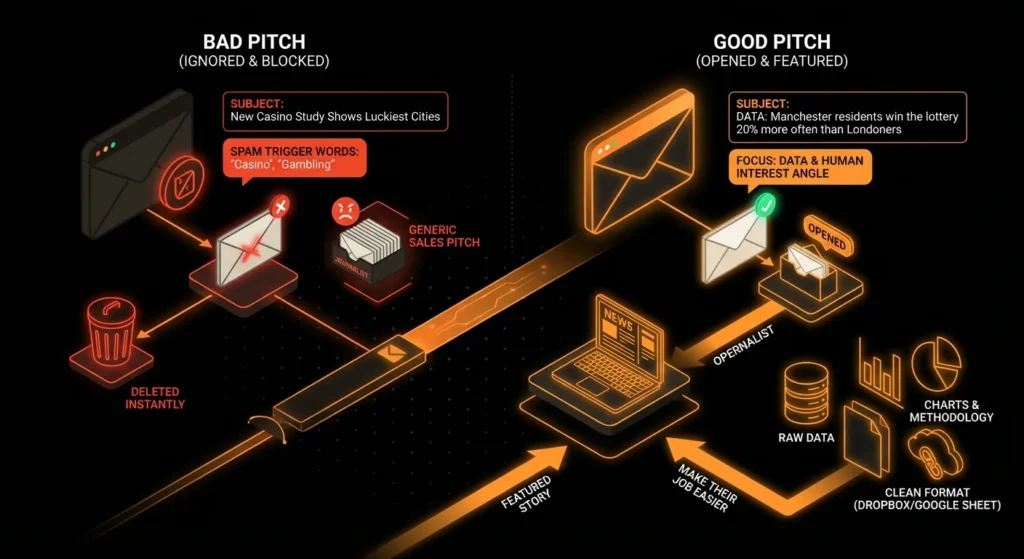
Creating the story is only half the battle. The hardest part is getting a busy journalist to open your email. Most journalists receive hundreds of pitches every day. If your email looks like a generic sales pitch, they will delete it instantly.
Your subject line is the most critical element.
Avoid using words like “Casino,” “Bet,” or “Gambling” in your subject line. These words often trigger spam filters in newsrooms. Instead, focus on the data or the human interest angle.
- Bad Subject Line: New Casino Study Shows Luckiest Cities.
- Good Subject Line: DATA: Manchester residents win the lottery 20% more often than Londoners.
Give them the “Raw Data.” Journalists do not want to copy-paste your press release. They want to write their own story.
To make their job easier, provide them with your raw data, charts, and methodology in a clean format (like a Dropbox link or a Google Sheet).
When you make it easy for them to do their job, they are far more likely to feature you.
The “Link Reclamation” Trick
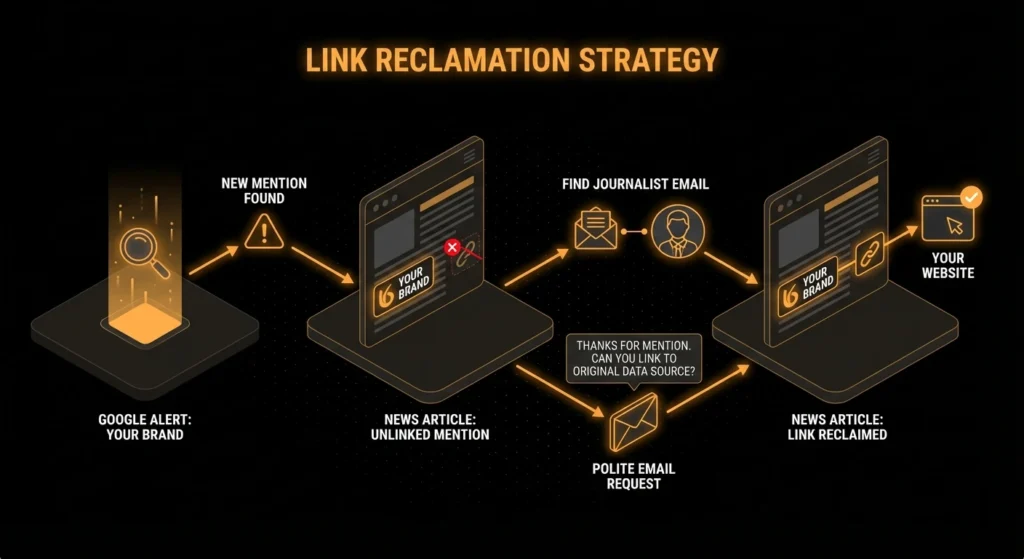
Sometimes, a newspaper will mention your brand name or cite your study but forget to include a clickable link. This is common, but it is also a huge opportunity. This strategy is called “Link Reclamation.”
The process is simple:
- Set up a Google Alert for your brand name.
- When you see a news article mention you, check if there is a link.
- If there is no link, find the email of the journalist who wrote it.
- Send a polite, short email thanking them for the mention and asking if they could link to the original data source so their readers can verify the numbers.
This has a very high success rate because the journalist has already decided that your brand is worth mentioning. You are simply helping them improve the user experience for their readers.
Measuring Success: It Is Not Just About Link Counts
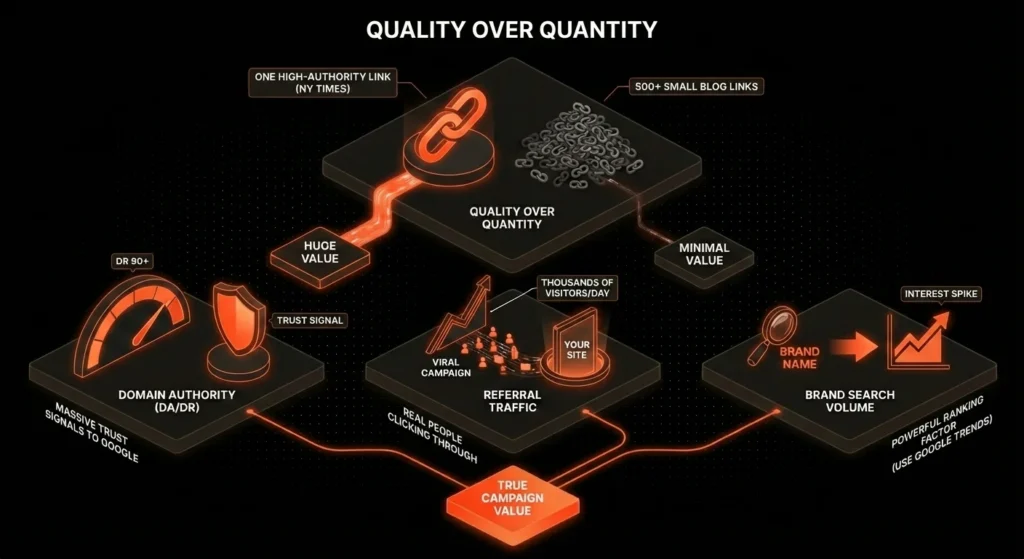
In traditional SEO, you might track success by counting how many links you built. In gambling digital pr, quality matters far more than quantity. One single link from a national newspaper (like The New York Times) can be worth more than 500 links from small blogs.
You should track these three metrics to understand the real value of your campaign:
- Domain Authority (DA/DR): Are the sites linking to you high authority? A link from a site with DR 90+ passes massive trust signals to Google.
- Referral Traffic: A viral campaign can send thousands of real visitors to your site in a single day. These are real people reading your story and clicking through to see the data.
- Brand Search Volume: When a campaign goes viral, more people start searching for your brand name on Google. This “Branded Search” is a powerful ranking factor.
Resource: You can use Google Trends to see if interest in your brand name spikes during your PR campaign.
Frequently Asked Questions
Is Digital PR expensive?
Yes, it is generally more expensive than buying standard guest posts because it requires a creative team to research data, design graphics, and pitch journalists.
However, the links you earn are permanent and often impossible to buy, offering a much higher long-term ROI.
Can I do this for a new casino site?
Absolutely. In fact, Digital PR is one of the best ways to launch a new site. Getting a few high-trust news links early on can help a new domain escape Google’s “Sandbox” faster than standard link building.
Do I need a big budget?
You need creativity more than money. Some of the most successful campaigns (like the “Dream Job” idea) cost very little to produce but require a clever angle that catches the media’s attention.
What if the newspaper uses a “Nofollow” link? Is it worthless?
Not at all. While a “dofollow” link passes the most direct SEO power, a “nofollow” link from a massive site like The Daily Mail or Forbes is still incredibly valuable.
It drives real referral traffic to your site and signals to Google that a major publication is talking about your brand. In 2026, Google’s algorithms are smart enough to use these “brand mentions” as a trust signal, even if the link technically doesn’t pass authority.
Conclusion
The links you get from Digital PR are not just for SEO; they build your reputation. When Google sees major newspapers citing your brand as a source of data, they stop viewing you as “just another casino affiliate” and start viewing you as an authority in the space.
You cannot buy this kind of trust. You have to earn it.
Creating viral stories and pitching national journalists is hard work. If you want a team that already has relationships with top editors and knows how to pitch igaming stories safely, we can help.
Ready to get featured in the news? Check out our [Get Found service] to see how we can build a Digital PR strategy that puts your brand on the world’s biggest websites.